


- Temporarily sold out
- Temporarily sold out
€38,10
Complies with EU Plant Health Regulation
Prices including VAT
Shipping throughout Europe
5% regular customers discount
Pick up in Limburg
3000 PostNL pick-up points

- Article number: MUSSIRE06
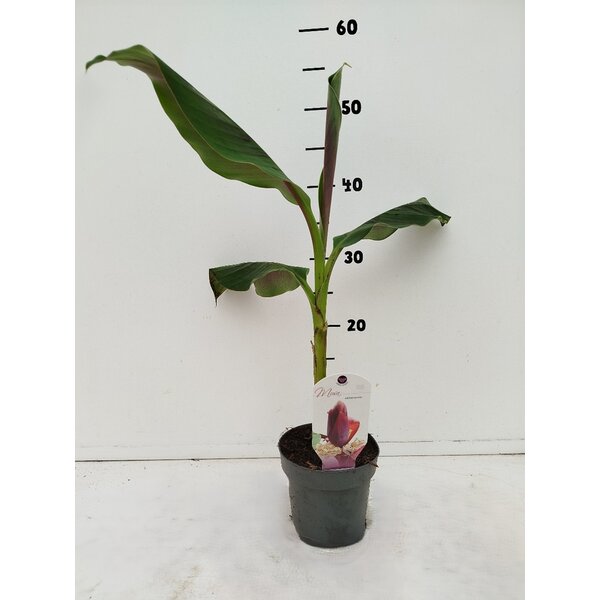
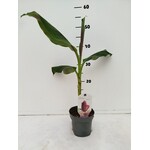
The Musa sikkimensis Red Tiger was discovered not so long ago. This garden banana is just as hardy as the Musa basjoo and certainly should not be missing from a tropical garden.
It occurs at the foot of the Himalayas up to an altitude of 2,000 meters in the Sikkim region, where it snows and freezes.
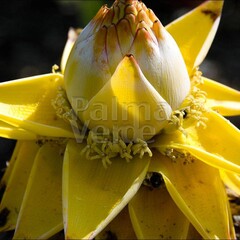
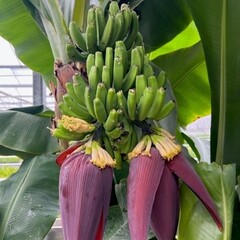
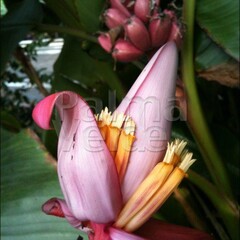
The bananas of the Musa sikkimensis are edible, but whether it will ever bear large fruit is highly questionable.
Firstly, it takes three years before the Darjeeling banana flowers at the earliest, and even then, fruit set depends on the summer we have. If it is a summer like in 2006, there is certainly a chance of edible fruit, but the bananas do not grow very large in our climate.
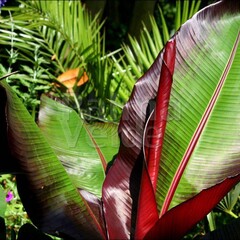
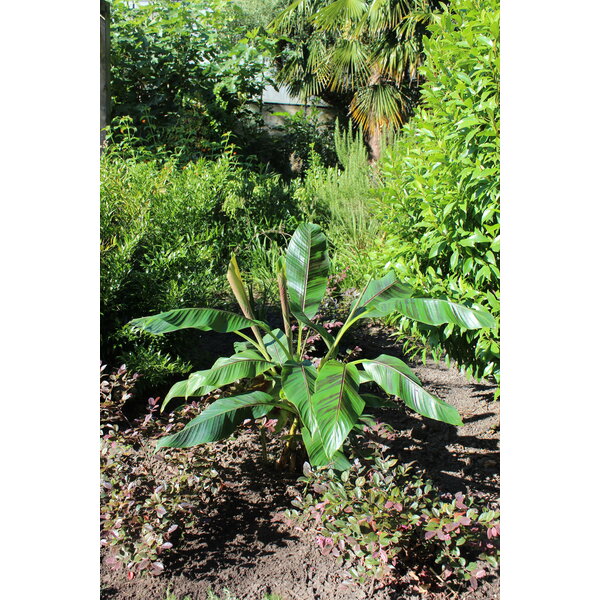
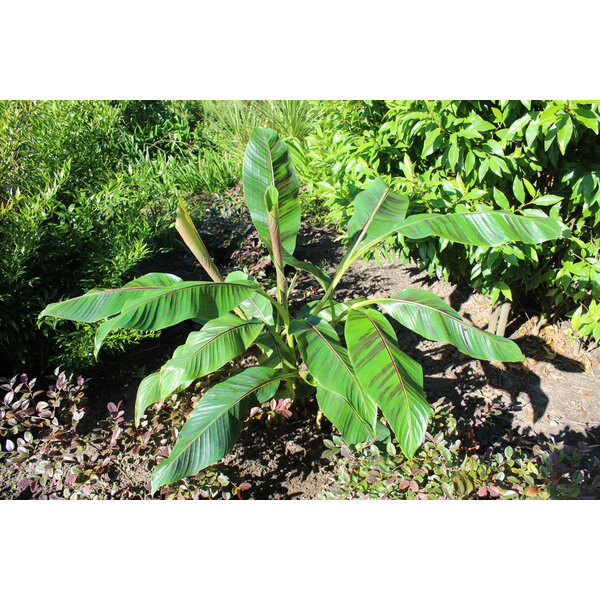
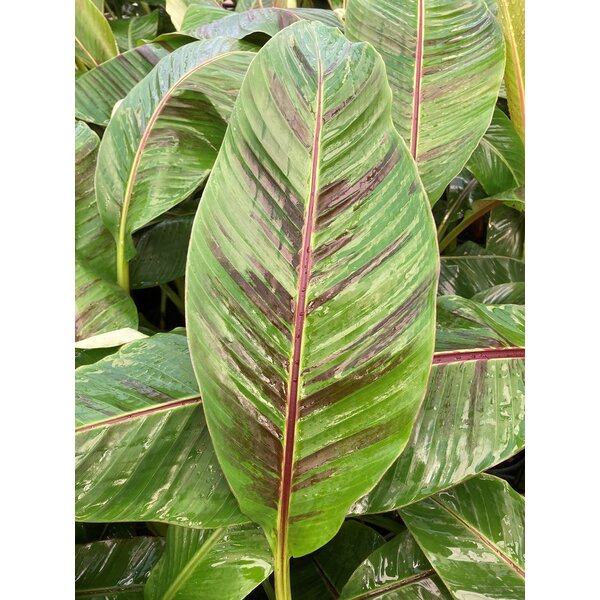
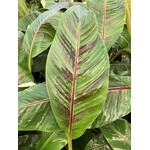
Another beautiful feature of this variety is that the underside of the leaves turns burgundy, while the upper side remains a beautiful deep green with a tiger print.
The leaves are also stronger than those of Musa basjoo and more resistant to the wind.
If you leave this banana plant outdoors to overwinter, cover the soil around the banana well with a layer of mulch so that frost cannot damage the roots.
The trunk will freeze back completely and will grow back in the spring if the frost does not penetrate too deep into the ground.
At temperatures below +5ºC, the banana plant's growth stops; at -2ºC, the leaves freeze and die. At even lower temperatures, the stem freezes.
If you want the banana plant to grow back larger next year, you must insulate the stem well using straw, reed mats, etc. Simply cut off the remaining leaves and wrap the stem loosely (not with bubble wrap, as it does not ventilate and causes rot).
You can choose to install additional heating in the form of string lights. On the ground, you can spread a layer of old horse manure or cow manure pellets in the spring, for example.
The plant will now start growing from the preserved stem and become even larger than the previous year. Only in this way is it possible to get the Musa sikkimensis to flower.
After flowering, however, the plant will die, but new plants continually emerge from the ground from the rhizomes. This process keeps repeating itself.
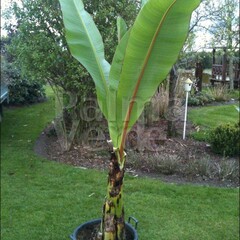
It will become a beautiful, full bed over time. However, this banana tree can also be kept successfully in a large container. In that case, water generously in the summer and give it a dose of organic (cow manure pellets) or liquid fertilizer every two weeks from April through September.
This ornamental banana is highly recommended for your garden to create a tropical look. The Musa sikkimensis gets going slightly slower in the spring than the Musa basjoo, but once it gets going, it grows fast! When shipping the bananas in a package, we may cut back the leaves. They grow back very quickly.
Winter hardiness zone 7a (-20ºC).
Specifications
- Article number: MUSSIRE06
- Minimum temperature: -20ºC
- Location: Sunny, half shadow
- Soil type: No special requirements
- Water requirement: Light damp
- Full ground: Yes, dies without protection in the winter and comes back in the spring
- Tub plant:
- Flowering period: After 3 years in the summer
- Origin / habitat: Himalayas (Darjeeling), North East India
- Growth rate: Fast
- Maximum plant height: 4 meters
Reviews