


- In stock
- Shipping in 1 to 5 business days.
€16,90
Complies with EU Plant Health Regulation
Prices including VAT
Shipping throughout Europe
5% regular customers discount
Pick up in Limburg
3000 PostNL pick-up points

- Article number: LEPSCO01
eptospermum scoparium is a small tree or shrub that originates from New Zealand. The tree is mainly known there as Manuka, the name given to this plant by the Māori. The plant is also known as the New Zealand tea tree, broom tea tree, or simply tea tree. Captain Cook used the leaves of the tree to brew tea.
Today, Manuka is best known for its honey. Honeybees can collect nectar from the Manuka for long periods, making it an excellent food source for these insects. The honey produced from Leptospermum is known as Manuka honey. This honey has antibacterial and antifungal properties, which makes it very valuable. The higher the percentage of “Manuka honey” in the total honey, the higher the rating assigned to it. This rating is expressed as a UMF score ranging from 0 to 25 or an MGO score ranging from 0 to 1200 mg/kg. The higher the score, the higher the price of the honey. High-scoring honey can therefore reach prices of more than 300 euros per kilogram.
The plant itself is not to moderately hardy. Protection is required during severe frost. Leptospermum usually grows as a shrub up to about 2 meters tall. However, when planted in the ground under the right conditions, it can also grow as a tree reaching heights of up to 15 meters. The plant occurs throughout New Zealand wherever temperatures allow, but it thrives best in the drier regions of the North Island. It has also been successfully introduced in Australia. In recent years, the plant has been widely replanted because of its useful properties, whereas in the 20th century it was nearly eradicated, as these properties were not yet known. In addition to the honey, the hard wood is easy to work with, and the sawdust has a distinctive flavor infusion. The plant’s oils are also used in the essential oil industry.
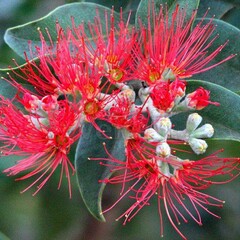
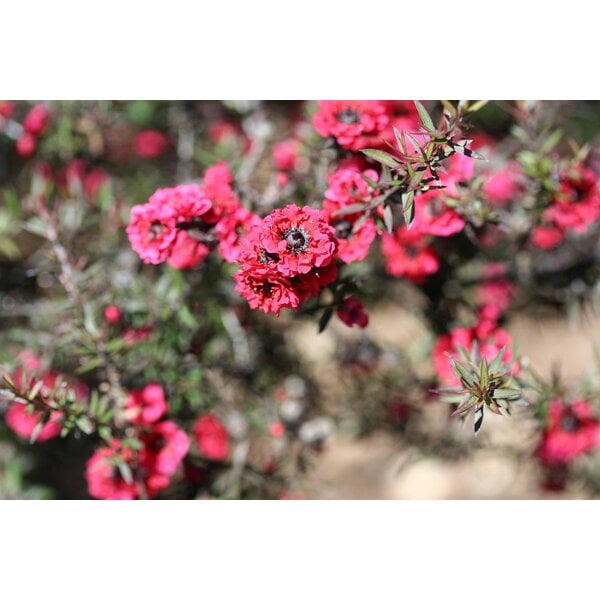
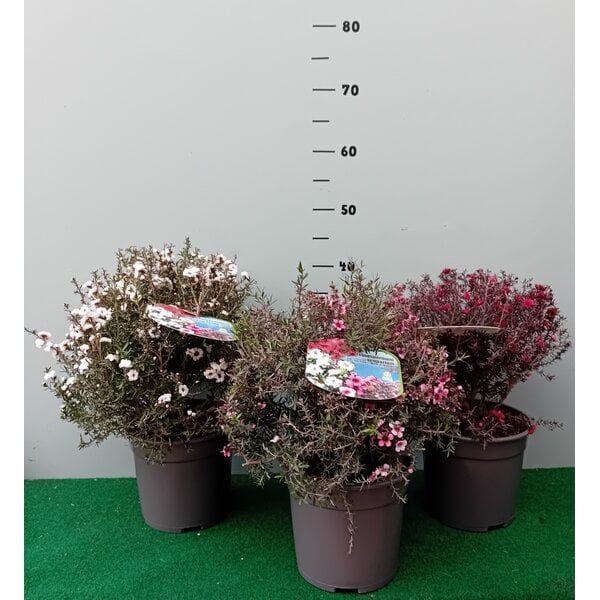
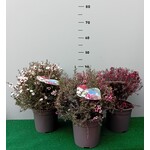
Leptospermum occurs in various colors. We have selected three: pink, white, and red. The red variety not only has red flowers but also slightly red-tinged leaves.
Hardiness zone 9 (-5 °C).
Specifications
- Article number: LEPSCO01
- Minimum temperature: 0ºC
- Location: Sunny, half shadow
- Soil type: No special requirements
- Water requirement: Light damp
- Full ground: Yes, protect severe winter
- Tub plant:
- Flowering period: 2-8
- Origin / habitat: New Zealand
- Growth rate: Normal
- Maximum plant height: 200cm as a bush
Reviews
No reviews found