


- In stock
- Shipping in 1 to 5 business days.
€32,95
Complies with EU Plant Health Regulation
Prices including VAT
Shipping throughout Europe
5% regular customers discount
Pick up in Limburg
3000 PostNL pick-up points

- Article number: TRAWAGN01
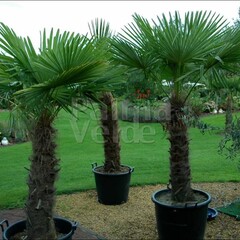
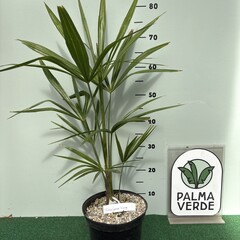
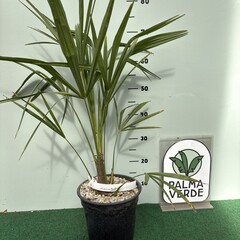
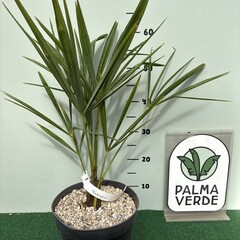
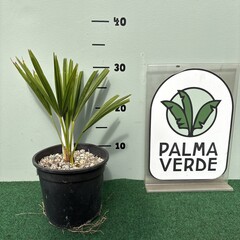
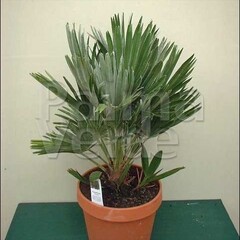
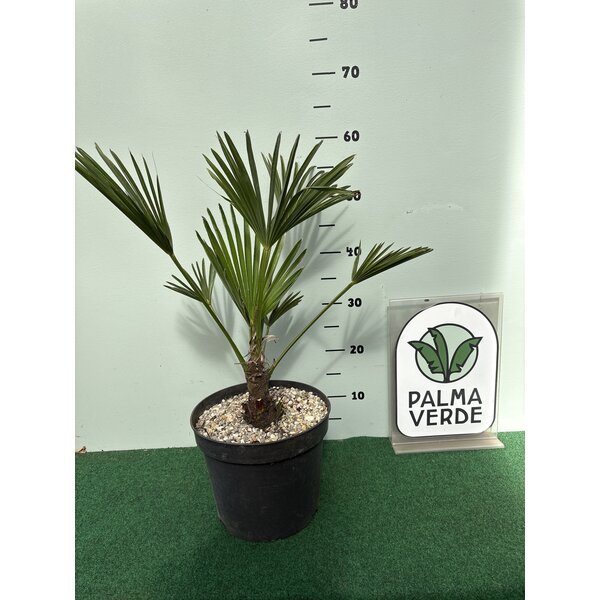
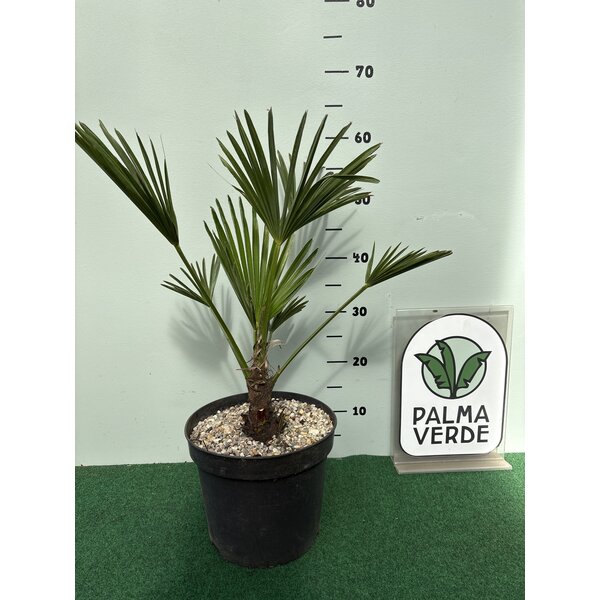
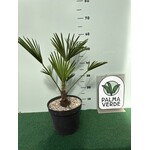
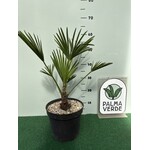
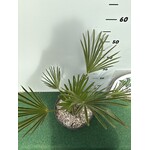
The Trachycarpus wagnerianus is named after the horticulturist Albert Wagner. It is a cousin of the well-known Trachycarpus fortunei. The plants have many similarities but are still easy to distinguish from each other.
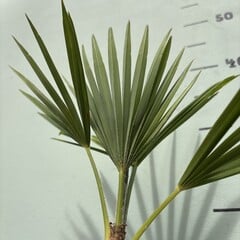
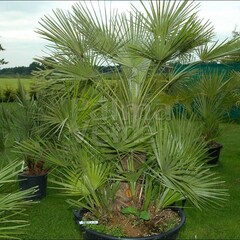
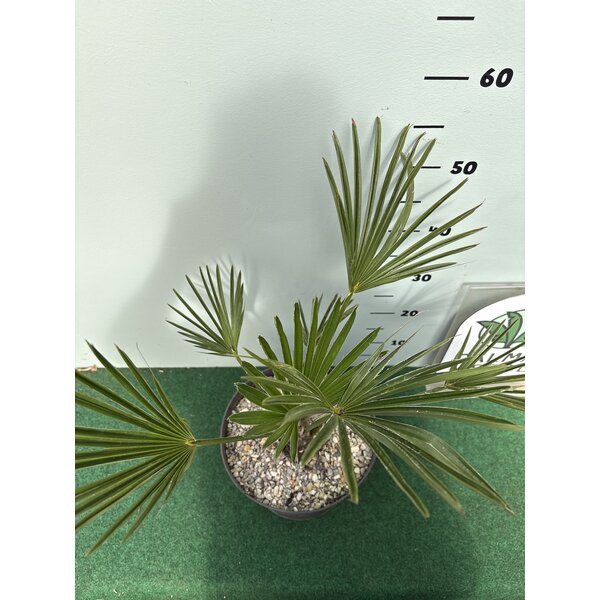
The leaves of the wagnerianus are shorter, sturdier, and less deeply incised than those of the fortunei. Young leaves are virtually circles and will only become incised later. The leaves can reach a diameter of 50 to 70 centimeters and grow on leaf stalks up to 90 cm long. The wagnerianus can reach a maximum height of about 9 meters under perfect conditions. In open ground in Northern Europe, a trunk height of 3/4 meter after 20 years is already quite an achievement. Additionally, young leaves appear to have more fluff than those of the fortunei. The flowers of the wagnerianus also appear somewhat more compact; especially when they have just emerged from the trunk, the flowers are almost compressed.
The differences are therefore mainly visible in the leaves. The stem is virtually the same as in common fortunei varieties. The plant itself is more resistant to wind due to its sturdy, compact foliage. In terms of winter hardiness, it is comparable to the fortunei, although it does appear that this variety is more prone to waterlogged roots.
The wagnerianus grows slightly less quickly compared to the fortunei, and its maximum height in particular is less than that of its more famous cousin.
The genus Trachycarpus comprises a number of well-known palm trees. The origin of this genus lies primarily in China and the foothills of the Himalayas. Precisely because of this origin, most plants are highly resistant to winters. Consequently, many palms have since spread throughout the world. Under the right conditions, a fortunei can grow to a height of 15-20 meters. In European gardens, however, they will remain considerably smaller. The trunk can reach a diameter of up to 30 centimeters and is formed by the base of older leaves. The rugged appearance of the trunk adds extra ornamental value to this plant. However, the greatest ornamental value lies in the leaves, which can occupy up to a square meter per leaf. Propagation of these species always takes place via seeds. A mature tree begins producing flowers when it is more than a meter tall; this can take at least 7 years. There are male and female plants, and through pollination, germinable seeds can grow on the female plants. The male plants have a yellow color, and the female plants a slightly greener color. Fertilized flowers will ripen into seeds on the flower and are then black, about a centimeter in size, and kidney-shaped.
Winter hardiness zone 7a (-15ºC).
Specifications
- Article number: TRAWAGN01
- Minimum temperature: -15/-17ºC
- Location: Sunny, half shadow
- Soil type: No special requirements
- Water requirement: Light damp
- Full ground:
- Tub plant:
- Flowering period: n/a
- Origin / habitat: Central China, East Asia
- Growth rate: Normal
- Maximum plant height: 12 meters
Reviews
No reviews found