


- In stock
- Shipping in 1 to 5 business days.
€9,99
Complies with EU Plant Health Regulation
Prices including VAT
Shipping throughout Europe
5% regular customers discount
Pick up in Limburg
3000 PostNL pick-up points

- Article number: MUGRIE01
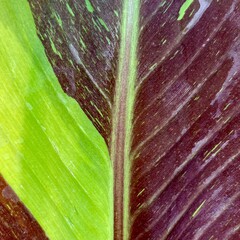
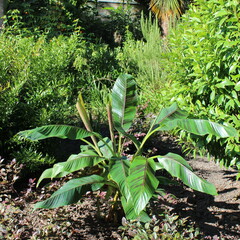
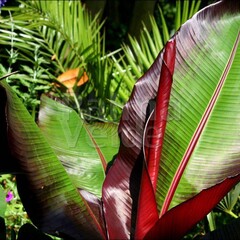
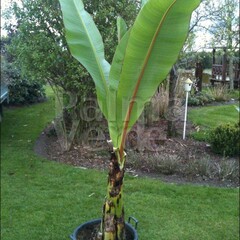
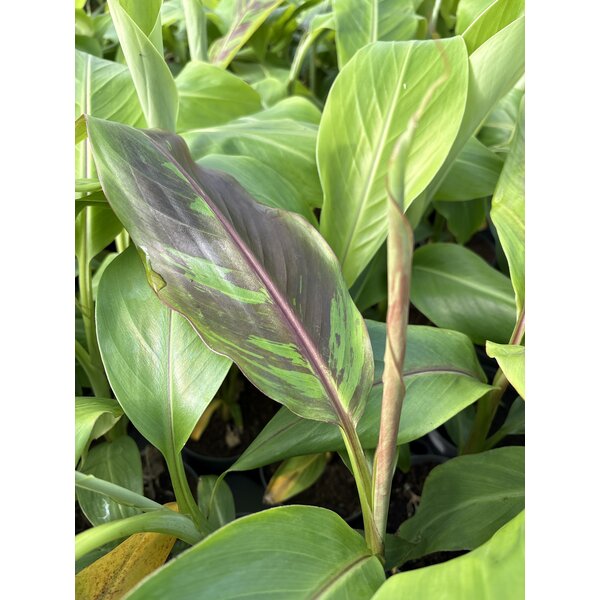
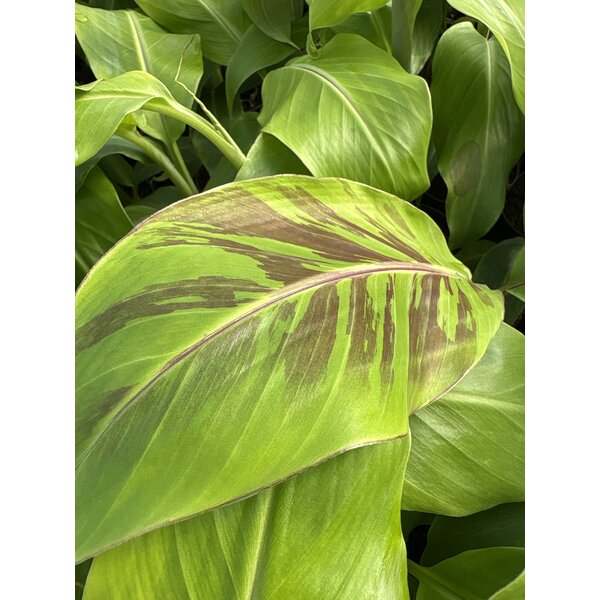
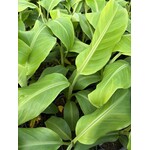
Musa griersonii is a rare banana species that originated in Bhutan. As the name suggests, this banana is particularly unique in its color. Mature specimens have purple markings in the leaves, creating a beautiful contrast with the rest of the banana's green.
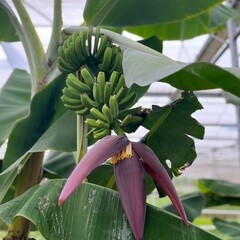
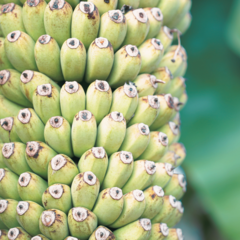
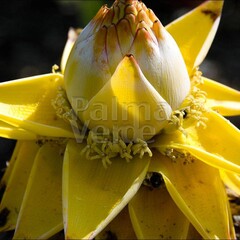
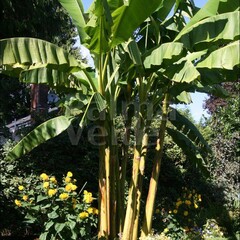
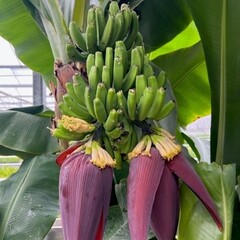
Musa griersonii is a herbaceous, perennial plant with a sturdy pseudostem of packed leaf sheaths and large, elliptical leaves up to 2.5 m long. The inflorescence bears red to purple bracts and small, angular fruits filled with hard black seeds. Although the fruits are not edible, they are sometimes cooked or eaten by animals. The species grows best in good, moist, well-drained potting soil under warm tropical conditions.
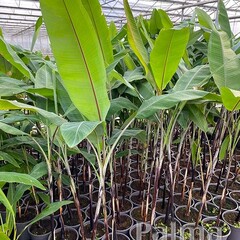
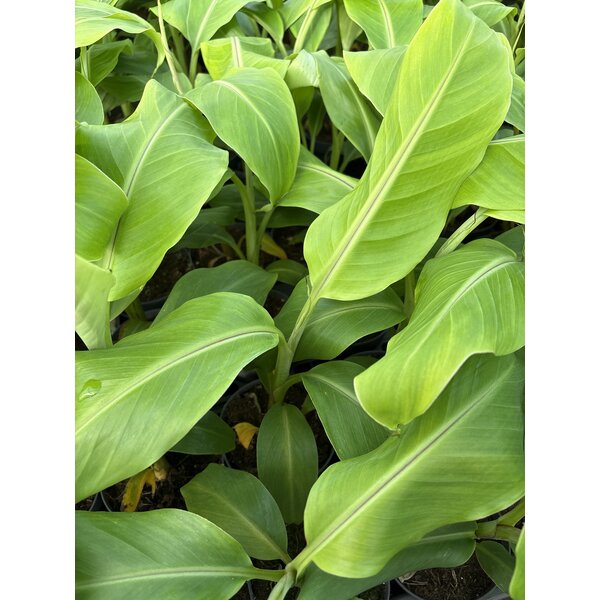
Smaller specimens are light green. The Bhutanese banana will display its purple leaves as early as the first year. The leaves change color faster, especially when it receives a lot of sun. Larger specimens are less prominent with the purple color but certainly do not have green leaves like the more well-known basjoo.
This banana is not winter-hardy like the basjoo and will therefore need to be protected. Ensure that the banana is kept indoors during the winter in a place where it does not freeze. The leaves can be trimmed to prevent damage, make it easier to transport, and ensure the banana requires less water. During this period, the griersonii must not dry out, but it is certainly important that it does not stand in overwater. When temperatures rise again, the plant can be moved outside and will quickly resume growth. A good option is therefore to dig up the plant every year and replant it in the ground in the spring. This way, you can enjoy a unique and exotic banana in the open ground.
Winter hardiness zone 11 (+5ºC).
Specifications
- Article number: MUGRIE01
- Minimum temperature: +6ºC
- Location: Sunny, half shadow
- Soil type: No special requirements
- Water requirement: Light damp
- Full ground:
- Tub plant:
- Flowering period: 5-10
- Origin / habitat: Thailand
- Growth rate: Reasonably fast
- Maximum plant height: 175/200 cm
Reviews
No reviews found